
Views: 0 Author: Site Editor Publish Time: 2026-03-18 Origin: Site
The evolution of packaging technology has greatly influenced the efficiency of manufacturing processes. With a constant push for speed, cost reduction, and improved product protection, businesses have increasingly turned to automation. One of the most crucial machines in this shift is the Pillow Packing Machine, which automates the packaging of soft, bulky products like pillows, cushions, and dog beds. Understanding the working principle of this machine is important for designers, buyers, and operations teams looking to optimize their workflow and improve productivity. This article will explore the Pillow Packing Machine's inner workings, providing a detailed step-by-step breakdown that will help businesses make informed decisions about their packaging processes.
A Pillow Packing Machine works by automating the process of packing soft products into a secure and compact form. The key function of this machine is to compress the product, reduce its volume, and seal it inside a durable film. This compressed packaging helps save on storage space and reduces shipping costs, making it a popular choice for industries dealing with bulky, soft items.
The general process begins with the feeding of the product into the machine, followed by the automatic formation of packaging material around the product. The machine then seals the packaging, compresses the product to remove excess air, and separates individual packed units. This automated sequence ensures that the packaging process is consistent, fast, and error-free.
Product Feeding: The product enters the machine’s packaging area.
Film Forming & Sealing: A film is wrapped around the product and sealed.
Compression: The product is compressed to reduce volume.
Cutting: Individual pillow packages are separated.
The first step in the operation of a Pillow Packing Machine is product feeding. Products are usually loaded onto the conveyor belt, where they are automatically fed into the packaging area.
In traditional packaging, workers manually feed products into the packaging machine, a process that can be slow and prone to errors. However, modern Pillow Packing Machines use automated conveyors that are designed to speed up this process. These conveyors are controlled by advanced sensors that guide each product through the machine’s packaging process.
One of the key features of Pillow Packing Machines is the use of smart sensors to control the flow of products. These sensors detect the position of each item and ensure that it is fed correctly into the packaging system. If there is an issue with the product's alignment or flow, the machine will automatically stop or adjust to prevent errors. This automation reduces the need for manual intervention and enhances the overall efficiency of the packing process.
After the product is fed into the machine, the next step is film forming and sealing. This stage is essential to ensure that the product is securely packaged in high-quality film, which provides protection during transport.
The film is unwound from a roll and guided into the machine. The film is usually made from polyethylene or similar materials, which are both durable and cost-effective for packaging. The film unwinding process is controlled automatically, ensuring the film is smooth, wrinkle-free, and ready for the next step.
The forming collar is a component that shapes the film into a tube around the product. The collar’s role is to provide structure and alignment for the film, ensuring that it wraps around the product in the correct manner. Once the product is inside the film tube, the next step is to seal the film around the product.
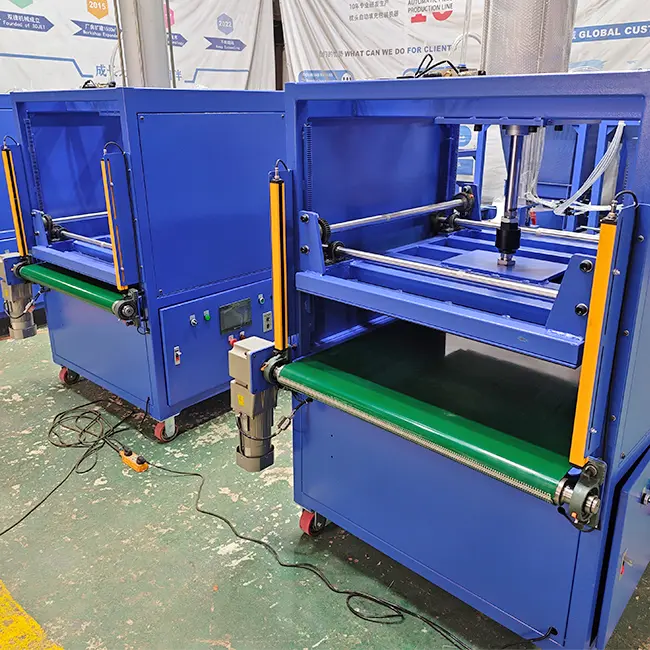
Once the product is in position and the film is formed around it, the next stage involves sealing the package. This is where the machine ensures the film is tightly sealed, preventing air from entering the package and keeping the product in its compressed form.
The longitudinal seal is the first type of seal formed by the machine. It runs along the length of the packaging film, sealing the edges and ensuring that the package remains intact. This is a critical step to avoid any gaps or weak spots in the packaging.
Once the longitudinal seal is completed, the next step is the cross-seal and cut. The cross-seal creates a seal across the width of the package, ensuring that the product is securely enclosed. After the sealing, the machine then cuts the film, separating the individual packages. This ensures that each pillow or cushion is packed separately and ready for shipment.
Process Flow of Pillow Packing Machine
Phase | Action | Output |
Feeding | Product enters line | Ordered product stream |
Film Forming | Film shaped around product | Tube ready for sealing |
Sealing | Seals formed | Pillow-shaped pack |
Cutting | Units separated | Finished package |
A critical component of modern Pillow Packing Machines is the incorporation of advanced automation and control features. These features ensure that the entire packaging process runs smoothly with minimal need for human intervention.
Programmable Logic Controllers (PLCs) are used in Pillow Packing Machines to control and monitor the machine's various functions. The PLC ensures that each phase of the process, from feeding to sealing and cutting, occurs at the correct time. The PLC also allows operators to make adjustments to the machine's settings, ensuring optimal performance.
Smart sensors are integrated into the system to monitor the flow of products and ensure precise control over the machine. These sensors detect any discrepancies in the product's positioning and automatically adjust the system to prevent errors.
Some pillow packing machines also come with additional features, such as touchscreens for easy operation and quick-change tools for adjusting packaging sizes. These features improve user experience and allow businesses to quickly adapt to different product types or packaging requirements. Quick-change tools can be especially useful when switching between different sizes or types of products.
Like any automated machine, Pillow Packing Machines can experience occasional issues that may affect workflow. It is essential for operators to understand these potential problems and know how to resolve them to minimize downtime.
Jamming is a common issue that can occur when products get stuck in the machine. This can happen if the product is not aligned correctly or if the conveyor belt becomes misaligned. Regular maintenance and proper machine calibration can help prevent jamming.
Film wrinkles can occur when the film is not fed properly, or when the film tension is incorrect. Operators can avoid this issue by regularly checking the film feeding system and ensuring that the tension is adjusted correctly.
Inconsistent seals may arise if the sealing temperature or pressure is not set correctly. To avoid this, operators should regularly monitor the machine's settings and adjust them as needed to ensure that the seals are strong and uniform.
Understanding the Pillow Packing Machine's working principle is crucial for businesses that want to optimize their packaging operations. By automating the packaging process, companies can improve efficiency, reduce labor costs, and ensure that their products are packaged securely and consistently. Sojet Machinery’s Pillow Packing Machines are designed with cutting-edge technology to meet the needs of businesses worldwide, helping them streamline their packaging workflows and increase productivity.
If you're looking for a high-quality Pillow Packing Machine, Sojet Machinery is here to offer you the best solutions. Contact us today to learn more about how our machines can improve your packaging processes and help your business grow.
What are the primary components of a pillow packing machine?
The primary components include the film feeding system, forming collar, sealing units, and cutting units.
How does automation improve the efficiency of pillow packing?
Automation increases packing speed, reduces labor costs, and ensures consistent and accurate packaging.
Can pillow packing machines be used for different product sizes?
Yes, pillow packing machines can be adjusted to accommodate various product sizes, making them highly versatile.
What are common issues with pillow packing machines, and how can they be fixed?
Common issues include jamming, film wrinkles, and inconsistent seals. These can be fixed with regular maintenance, proper adjustments, and monitoring settings.


